There’s a reason you’re still searching.
Beyond Functional Medicine
Physician-guided metabolic brain and body medicine
When you already have doctors, diagnoses, test results, and treatments—or simply more health information than you know what to do with—the answer may not be more pieces.
It may be having one experienced physician step back, see the whole picture, and determine what matters, what connects, and what deserves attention first.
You’re already done a lot.
So Why Are You Still Searching?
MAYBE YOU’VE SEEN EXCELLENT
PHYSICIANS AND SPECIALISTS.
YOU’VE HAD TESTING.
YOU’VE RECEIVED DIAGNOSES.
YOU’VE TRIED MEDICATIONS,
CHANGED THE WAY YOU EAT,
TAKEN SUPPLEMENTS, WORKED ON
SLEEP OR EXERCISE,
OR EXPLORED OTHER APPROACHES
TO YOUR HEALTH.
Some of it may have helped.
And yet you may still be the person trying to make sense of all of it.
How does one problem relate to another? Which findings actually matter? What deserves attention first?
If that sounds familiar, the problem may not be that you haven’t tried hard enough—or that you need another isolated intervention.
What may be missing is integration.

More information isn’t always the answer.
What Does “Beyond Functional Medicine” Mean?
FUNCTIONAL MEDICINE HELPED ADVANCE AN IMPORTANT IDEA:
SYMPTOMS AND DIAGNOSES SHOULD BE UNDERSTOOD IN THE CONTEXT OF THE WHOLE PERSON.
But looking at more systems does not automatically create clarity.
You can have more testing, more data, more possible explanations, and more things you could do—and still be left with the same fundamental question:
What matters most? That is where medical judgment becomes essential.
Which findings help explain the larger pattern? Which may be secondary? What deserves attention now? What can wait? And would additional testing actually change what we do?
At Touchpoints180, we begin with what is already known: your history, symptoms, diagnoses, medications, existing medical care, laboratory findings, physiology, and what you are trying to restore in your life.
Then we determine what deserves attention and build from there.
Additional testing when it can inform a decision. Metabolic, nutritional, lifestyle, and medical interventions chosen for a reason. Measurement to see what is actually changing. Adjustment as we learn how your biology responds.
The goal isn’t to accumulate more findings.
It’s to know what matters—and what to do next.
This was never just about your numbers.
The Goal Isn’t a Better Lab Report. It’s a Better Life.
BLOOD SUGAR MATTERS. SLEEP MATTERS. INFLAMMATION, METABOLIC HEALTH, ENERGY, AND CLEAR THINKING ALL MATTER.
BUT THEY MATTER BECAUSE OF WHAT THEY MAKE POSSIBLE.You want enough energy to participate in your life rather than ration it.
You want your brain available for the work, relationships, decisions, and interests that matter to you.
You want your health to expand what you can do—not become another full-time job to manage.
That’s why we don’t define progress by a single laboratory value, diagnosis, or symptom.
Are you thinking more clearly? Functioning more consistently? Able to participate more fully in your life? Returning to things that had become difficult?
Ultimately, the purpose of improving your physiology is to help your biology support the life you want to live.
That is where we are trying to go.
WHEN HEALTH IS COMPLEX, THE PIECES HAVE TO BECOME A PLAN.
Ten potentially important findings don’t automatically create a plan.
Someone still has to determine what matters most, what may be connected, what deserves attention now—and where to begin.
-
See the Whole Picture
Start with what we already know. -
Decide What Matters
Identify the patterns and priorities that deserve attention now. -
Build the Strategy
Choose interventions deliberately, based on what the larger picture tells us. -
Follow the Response
Measure what is changing in your biology, symptoms, function, and daily life. -
Adjust
Refine the strategy as your physiology changes and we learn more.
Your body has been telling one story all along
Your Brain and Body Are Part of the Same Biology
Metabolic Brain and Body Medicine

Metabolism, sleep, hormones, inflammation, nutrition, medications, movement, stress physiology, and brain function do not operate independently.
A change in one can influence several others. And the finding that looks most obvious is not always the one that matters most.
At Touchpoints180, we look across these systems to understand the relationships between them—and which of those relationships may actually matter in you.
We don’t assume every system needs fixing.
We determine which ones deserve attention.
That is Metabolic Brain and Body Medicine.
Before you go any further, let me orient you.
What It Means To Work With Touchpoints180
PHYSICIAN-LED. COLLABORATIVE. BUILT AROUND YOUR LIFE.
This is physician-led work. But it is work we do with you.
Touchpoints180 is designed for people who want more than another set of recommendations to follow.
We bring together your medical history, existing care, medications, laboratory findings, symptoms, metabolic health, nutrition, sleep, movement, stress physiology, and the changes you want to make in your life.
Then we help you determine what matters, what may be connected, and where to begin.
This is not a protocol you follow.
It’s a way of understanding your health that you learn.
What this work asks of you
This is not passive care.
But it is supported care.
FUNCTIONAL MEDICINE ATTRACTS CAPABLE PEOPLE—AND MANY ARE EXHAUSTED FROM CARRYING THE BURDEN ALONE.
Touchpoints180 is different. You are not asked to self-diagnose your way through the internet. You’re not asked to execute a rigid protocol perfectly. And you’re not asked to become your own physician.
But you are asked to engage.
This work asks you to participate in the parts of your health that only you can change: how you eat, sleep, move, recover, manage stress, and apply what you are learning in daily life.
We help you understand what matters, decide what to work on first, and adjust the strategy as we learn from your response.
You do not have to do everything perfectly. But you do have to participate.
Because lasting change is built in the life you live every day.
When energy is restored at the cellular level, clarity and stability can return.
So what does this look like in real life?
How Touchpoints180 Works
WE BEGIN WITH THE WHOLE PICTURE. THEN WE DECIDE WHAT MATTERS.

The Framework
Complex health rarely arrives as a clean, single problem. By the time people find their way here, there is often already a great deal known—and still no clear understanding of how it all fits together.
We begin by stepping back. We look at what is already known, but we don’t assume the existing explanation is complete. We examine the larger pattern, question what doesn’t fit, and look for important connections or gaps that may have been missed.
Then we decide what deserves attention now, what can wait, and what what we need to investigate further before deciding what to do next.
The Goal
A strategy that makes sense of the whole picture
From there, we build a plan around your physiology, your priorities, and the life you’re trying to get back to—not around a standard protocol.
THE RIGHT NEXT STEP COMES FROM KNOWING WHAT MATTERS—AND FOLLOWING IT FAR ENOUGH.
Who Finds Their Way Here?
You’re Not At The Beginning Of Your Search
You may have already done more than most.
You may already have physicians, specialists, diagnoses, laboratory results, medications, nutrition strategies, supplements, or years of experience trying to understand what is happening in your body.
Some things may have helped. Others haven’t. And there may still be symptoms, findings, or changes that don’t quite make sense.
What you’re looking for now is not simply another opinion.
You want someone to look closely enough, think broadly enough, and stay with the problem long enough to understand what may actually be going on.
This may sound familiar.
-
The Picture Has Become Complicated
Your health no longer seems explainable by one diagnosis, one symptom, or one system. -
You Have Good Care But It Still Seems Fragmented
Different clinicians may be addressing different pieces, while no one is looking closely at how they fit together. -
You’ve Done a Great Deal Already
Testing, treatments, medications, nutrition, supplements, research—you’ve put real effort into getting better, but the results haven’t matched the effort. -
You Still Believe There is More to Understand
Something still doesn’t make sense, and you want a physician willing to investigate what deserves pursuing.
You don’t need to arrive knowing the answer.
You may simply know that the way you’re feeling, functioning, or living is not where you want to stay—and that you’re ready for someone to take the whole picture seriously.
Proven Expertise in Metabolic Brain & Body Medicine
Decades of clinical experience. Published outcomes helping advance the field. Medicine grounded in what happens in real lives.
Years of Clinical Excellence
Decades spent treating complex health through the connection between brain, body, and metabolism.
Lives Transformed
Helping people reclaim their health, function, and the lives they want to live.
Measurable Progress
Individualized outcomes across health, function, resilience, quality of life, and metabolic health
I built this because I had watched too many people lose years inside a healthcare system full of good people and disconnected answers.
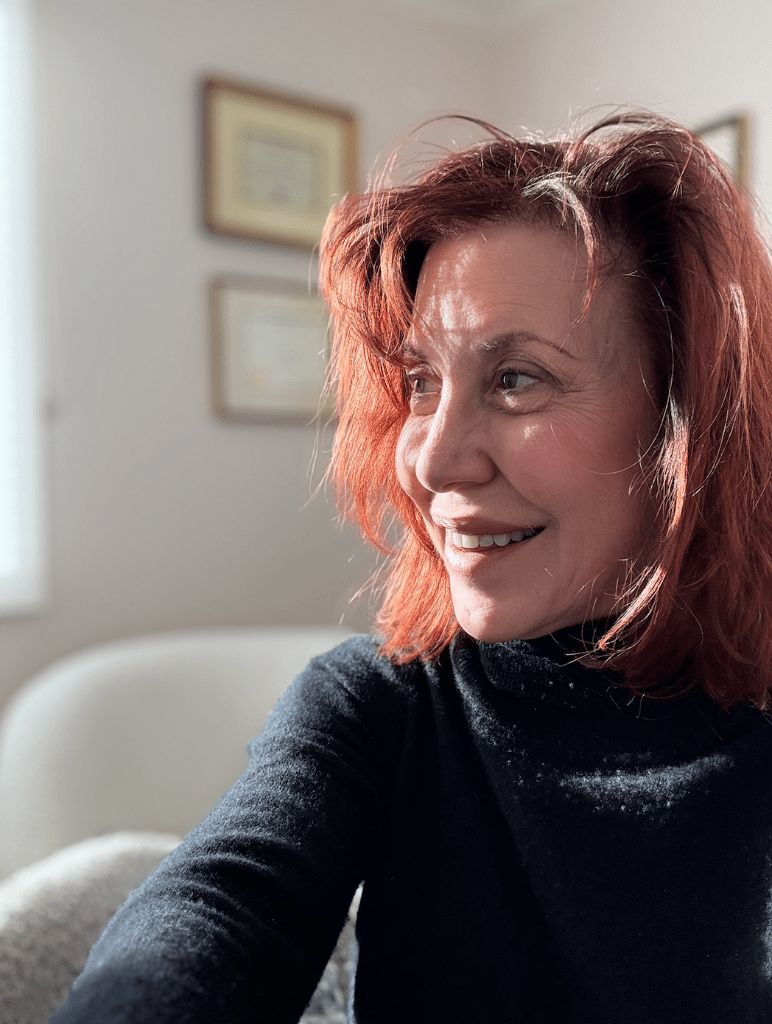
Meet Lori Calabrese, MD
Symptoms were being treated.
For more than 25 years, I’ve worked with people whose health could not be understood by looking at one diagnosis, one organ system, or one set of symptoms at a time.
Educated at The Johns Hopkins University School of Medicine and trained at Harvard/Massachusetts General Hospital, I was taught to think deeply about disease, evidence, and the practice of medicine. Over time, my patients taught me something equally important: the most consequential questions often live in the spaces between specialties.
The question became not simply, “What else can we treat?” but, “What are we missing because no one has stepped back far enough to see how the pieces fit together?”
That question changed the way I practice medicine.
My work has centered on the biology shared by brain and body—the relationships among metabolism, cognition, mood, inflammation, energy, sleep, hormones, nutrition, and the many ways the body adapts when something is no longer working well.
Touchpoints180 grew out of that work: a physician-led approach for people who need more than another opinion, another protocol, or another isolated piece of information.
They need someone capable of seeing the whole picture—and knowing what to do with it.
I’ve spent my career in the intersection where most models break: the overlap of physiology, mood, cognition, inflammation, and metabolic health.
Over the years, I’ve become less interested in giving people more pieces—and more interested in helping them understand which pieces matter.
The work is not simply to identify more abnormalities. It is to recognize the pattern, determine what is driving it, and build a strategy that can change where your health is headed.
The goal is not to know more about your health. It is to finally know what to do next.
Published Clinical Work. Real-World Outcomes.
In this Metabolic Mind conversation, I discuss a published case series involving adults with more than 15 years of anxiety, depression, and attention difficulties despite treatment. Their remarkable recoveries emerged as we looked beyond individual diagnoses to the biology connecting brain and body.
The outcomes were extraordinary. But the larger clinical lesson has stayed with me: when symptoms cross systems, the most important question may not be what else we can treat, but what becomes visible when we understand how the pieces fit together.
IF YOU’RE WONDERING WHETHER THIS APPROACH MAKES SENSE FOR YOU, START WITH A CONVERSATION.
In Collaboration With


Real stories from real people
Testimonials
— Liz
Connecticut
— Peter
Connecticut
I came in thinking I needed a better protocol. What I needed was understanding. Once my body finally made sense, everything got calmer — my choices, my symptoms, my fear. For the first time, it felt like real progress.
— R. P.
Connecticut
This is the first place where I didn’t feel like a mystery
— F. T.
New Hampshire
My sleep improved, my gut settled down, and my labs started moving — but what mattered most was having a plan I could actually sustain.
Massachusetts
This work is about more than feeling better.
It’s about changing where your health is headed.
Frequently Asked Questions

Our Approach
How is this different from traditional functional medicine?
There is considerable overlap in the questions we ask, particularly around metabolism, inflammation, nutrition, sleep, hormones, and the ways different systems influence one another.
Where Touchpoints180 differs is in how those pieces are interpreted and prioritized.
Many people come to us after years of thoughtful care, extensive testing, multiple specialists, supplements, dietary changes, or other functional approaches. They may have learned a great deal about their health and still be left wondering which findings are important, which are incidental, and what they should actually do next.
That is where physician judgment becomes essential. We look across the entire clinical picture, including what is already known, and decide where the strongest signals are. Sometimes further investigation is warranted. Sometimes the more important decision is what not to pursue.
The purpose is to arrive at a clearer understanding of what is most likely driving the problem and where intervention is most likely to matter.
Why can I still feel unwell when my labs are “normal”?
A laboratory result can fall within a population reference interval and still fail to explain the clinical picture in front of us.
We look at laboratory findings in the context of your symptoms, medical history, medications, changes over time, and what is happening across related systems. A value that seems unremarkable by itself may become more informative when considered alongside other findings.
There are also important aspects of physiology that a routine laboratory panel was never designed to capture. When the clinical picture and the available data do not seem to agree, that discrepancy deserves thoughtful consideration rather than dismissal.
What if I have a lot of abnormal findings? How do you know which ones actually matter?
This is often one of the most important questions we have to answer.
A long list of abnormal findings can create the impression that everything needs to be addressed. Clinically, that is rarely the most useful way to think about a complex case. Some findings may be consequences of the same underlying physiology. Others may be incidental, secondary, or unlikely to explain what is happening.
We look for relationships: what fits the history, what has changed over time, which findings reinforce one another, and which ones could plausibly account for the way you are functioning now.
From there, we establish priorities. Good medicine requires knowing what deserves attention and having enough judgment to leave lower-value findings alone.
Why do symptoms involving different parts of the body so often occur together?
The divisions between medical specialties are useful for organizing care, but human physiology does not operate along those same boundaries.
The brain, endocrine system, immune system, gut, cardiovascular system, muscles, and other tissues depend upon many of the same metabolic and regulatory processes. The brain itself is extraordinarily metabolically active and responsive to what is happening throughout the body. Changes in energy metabolism, insulin signaling, inflammation, sleep, stress physiology, hormones, nutrition, or medications can therefore have effects that appear in more than one place.
This is why someone may arrive with symptoms that have been treated separately for years even though there may be important biological relationships among them.
Recognizing those relationships can change the questions we ask and where we direct our attention.
What if I already have excellent doctors and specialists?
Many of the people who come to Touchpoints180 do.
Your physicians may each be managing important parts of your care very well. The difficulty arises when the problems cross specialties and no one has sufficient opportunity to stand outside those individual areas and ask how the findings relate to one another.
Our role is often to work with the care you already have, understand what each piece contributes to the larger picture, and identify questions that may not become visible when each system is considered separately.
What if I’ve already tried functional medicine?
That experience can be very useful.
You may already know how you respond to particular foods, supplements, medications, hormonal interventions, or changes in sleep and activity. You may have extensive testing and years of observations about your own health. We want to understand that history rather than discard it.
The question becomes what the accumulated experience tells us. Which interventions produced a genuine change? Which effects lasted? Which assumptions were never adequately tested? Are there findings that were given considerable attention without ever explaining the larger clinical picture?
For many people, the next step is a more disciplined interpretation of what has already been learned, followed by a clearer sense of where attention belongs now.
This is much better than saying functional medicine “didn’t work.” It respects your investment and intelligence.
How do you decide what to investigate—and what to leave alone?
We begin with the clinical question.
Before adding another test or pursuing another possible explanation, we consider what we are trying to understand and whether the answer is likely to influence what we do.
Complex medicine inevitably presents interesting abnormalities, associations, and possibilities. Pursuing every one of them can become expensive, exhausting, and surprisingly unhelpful. Clinical judgment includes deciding which leads are sufficiently plausible and consequential to pursue.
As the picture becomes clearer, those priorities can change. Investigation should serve the clinical reasoning rather than become an end in itself.
How do I know whether Touchpoints180 is the right next step for me?
You do not need to know that before you call.
You may simply know that despite the care you have received and the work you have already done, important questions remain unanswered. Perhaps your health has become more complicated, the pieces no longer seem to fit together, or you are spending too much of your own time trying to decide what everything means.
The Discovery Call gives us an opportunity to hear what has brought you here and determine whether the way we work is appropriate for what you need.
If there appears to be a good fit, we’ll explain what the next step looks like.

This may be the moment things begin to turn.
A Different Way Forward Is Possible
When the systems that govern metabolism, inflammation, and regulation begin to stabilize, the brain and body begin responding together.
Energy becomes more reliable. Thinking feels clearer. Mood steadies. Health begins to feel less fragile and unpredictable.
Understanding your physiology gives us a way to work with what is actually happening—carefully, deliberately, and with attention to how you respond.
At Touchpoints180, we take the time to listen, evaluate what may be contributing to the larger pattern, and determine what deserves attention next.
As the underlying physiology becomes more stable, people often regain something larger than symptom relief: the capacity to think ahead, make plans, participate more fully in their lives, and trust themselves again.
You don’t need a quick fix. You need clarity.
What’s a Discovery Call?
The Discovery Call is an opportunity for us to hear what has brought you here, understand what you are looking for, and determine whether the way we work is appropriate for what you need.
You’ll have an opportunity to ask questions and learn more about the Touchpoints180 approach.
If there appears to be a good fit, we’ll explain what the next step looks like.

You were made to function with clarity, energy, and resilience.
The path forward begins with understanding what your brain and body need to function well together.